
When seniors receive some or all of their nourishment from pureed foods it is important to know about food preferences, choices and options. First, do you know what foods your senior person likes? This is a good place to start.
Next – dietary concerns. Has a medial professional or nutritionist recommended certain nutrients to put into the elder’s diet? Is the senior taking/drinking a nutrition supplement? Are there restrictions because of either allergies or contraindications that affect the effectiveness of medications? Be conscious that the senior may need to reach a certain calorie threshold. Every patient is different.
Once you have an idea of what you can work with, pureeing food can be easy to manage and taste good. Recipes can be simple and provide grateful seniors a tasty meal or snack.
Here are a few ideas for some tasty, pureed food recipes and general tips for pureeing meals:
- You’ll need a proper food processor.
- Taste depends on the texture of the meal.
- Your ingredients should be smooth, not chunky.
- Smoothies can save the day.
- There are food molds you can buy that shape a puree into solid-looking meals. Hospitals have had good luck with them to make the pureed meals look more appetizing when a loved one is having difficulty with their meals.
- Try to keep hot foods hot and cold foods cold. It helps define mealtime.
Mango or Strawberry/Banana Smoothie
This can be a breakfast, a lunch or a snack. Peel bananas and keep single ones wrapped in the freezer. Blend a frozen banana with frozen and diced mango pieces with a cup of plain Greek yogurt, some honey and two teaspoons of almond milk. Process the ingredients until smooth. You can eliminate the fruit and put in peanut, almond or other nut butters if in-line with medical food advice.
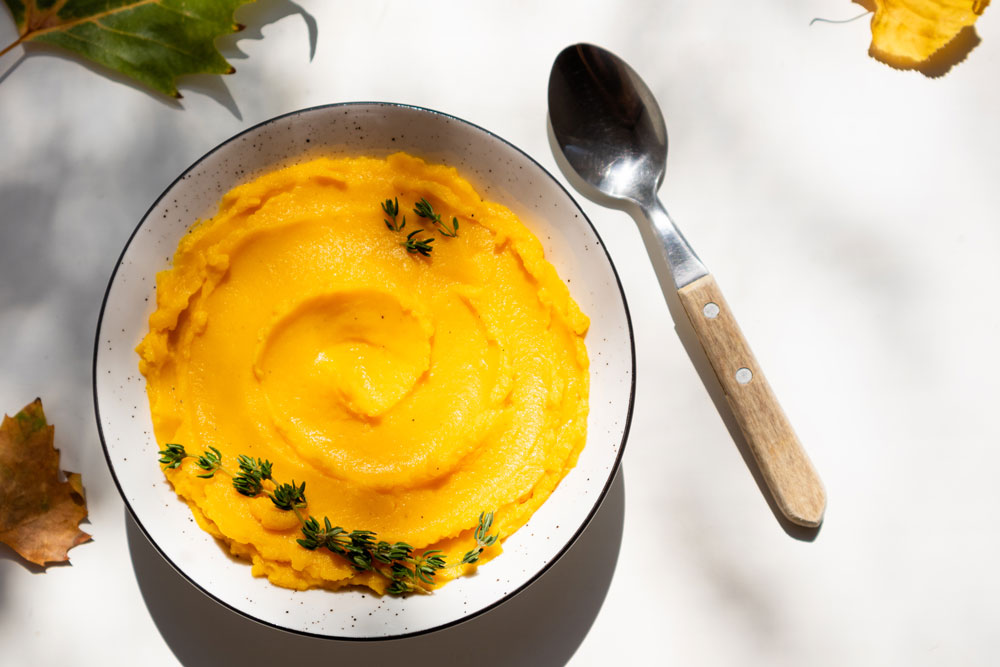
Autumn Pumpkin Soup or Butternut Squash Soup
This is a lovely seasonal meal with several options. If you can roast or bake some pumpkin or squash, the nice, sweet-smoky flavor will add a lot to the taste.
Whether you use freshly cooked or canned pumpkin puree, you’ll need:
5 cups pumpkin or squash (or puree)
3 cups vegetable stock or broth
1 teaspoon of fresh-sliced and diced ginger
½ – ¾ cup heavy cream
3 large diced shallots or ½ cup sautéed onion (sautéed in olive oil or butter)
2 cloves garlic
½ teaspoon of nutmeg or ½ teaspoon pumpkin spice
Salt and pepper to taste (sometimes less is more when it comes to salt)
Note: Make sure you taste as you go. You may add a small amount of water or broth if necessary. Use only a little at a time.
Add all of the ingredients to a pot or Dutch oven, leaving out the heavy cream, and bring to a high boil. Immediately reduce heat and let it simmer for 30 minutes. Let cool for 10 minutes and then puree in a blender or processor until the consistency is desirable. Return the puree to the pot, and bring to a boil again – then reduce to a simmer. After 20 minutes, stir in the heavy cream, simmer and serve. Enjoy!
Beef, Lamb, Veal, Chicken or Tofu Stew
This works for any meat and vegetable, or fish and vegetable puree.
Place 4 ounces of well-cooked (but not dry) meat, or fish into a food processor. Add a ½ cup of liquid – broth or gravy. Add in your preferred cooked vegetables such as peas, celery carrots, zucchini or cauliflower. Add some salt and pepper to taste. Your senior might tell you if they want garlic, a bit of hot sauce or a dash of lemon juice. If you need to thicken the stew add a bit of grated potato.